Frameless vs architrave pocket doors - design differences explained
The 21st century renaissance of the pocket door can be attributed to the qualities it brings in terms of both visual appeal and practicality. The pocket door can be a suitable design feature in a range of different styles of property, for modern homes, period homes and commercial businesses of all shapes and sizes, while the practical benefits it brings can help with space efficiency and flexibility for any type of property. But when it comes down to specific types of pocket door, the benefits of different styles become slightly more nuanced, and a good example of that are when comparing a frameless pocket door with an architrave pocket door.
What is a frameless pocket door?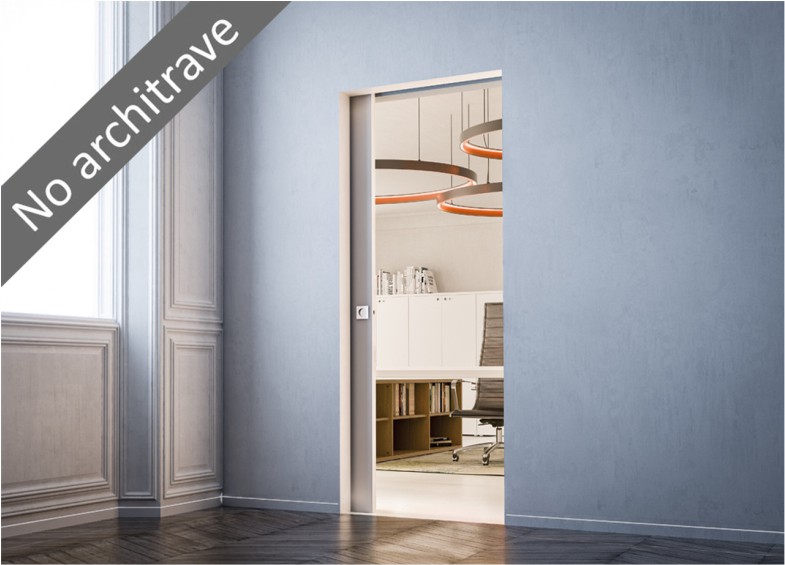
A frameless pocket door is a door without a surrounding architrave. Architrave is a type of decorative moulding that is fitted to the outside of a door or window. It serves a purpose similar to skirting boards in that it hides the joint between the wall and the door or window frame. This makes the finish much neater and cleaner, by hiding any untidy plasterwork or gaps. It also prevents cold air coming through those gaps, so makes a room more energy efficient. However, to many people architrave is merely a decorative thing, and in many contemporary buildings there is an onus on minimalism and being clutter-free. This means removing items deemed unnecessary and architrave perhaps comes into that category.
A frameless pocket door, sometimes called a flush pocket door, or a syntesis pocket door, uses a specialised edge profile to create a seamless joint between the door and the wall. The door effectively sits flush with the wall and therefore creates a neat, elegant and flawless finish. This is ideal for modern residential buildings, but also style-led commercial buildings, such as hotels, bars and restaurants and high-end retail such as boutique shops and salons. This ‘hidden’ look is very fashionable, and the aesthetic appeal is one of the key differences between frameless and architrave pocket doors.
Pocket doors with architrave – usually known as a ‘classic pocket door’ - have a visible timber mould around the door with a profile to match the door and maybe other features in a room, such as skirting boards or ceiling mouldings. These are more suited to a period or traditional building and therefore fit the overall theme of a property. They also help to add prestige and structure to an entrance location. Frameless pocket doors, by contrast, are unconventional and eliminate the visible frame around the door. This enables plaster to be applied right up to the edge of the door frame, which does therefore call for more skill and precision in how plaster is applied. This provides a cleaner and more minimal finish where the door effectively blends into the surrounding walls.
There is a difference in the type of pocket door frame used for each type of door, which makes the installation process for each slightly different. Architrave doors are able to use the architrave to hide any discrepancies in the plasterwork or timber jointing, while a frameless pocket door frame sits closer to the wall and is almost embedded in it. Because of this, frameless systems require more precision with the plasterwork, as any cracks or blemishes will be visible.
Architrave doors are used in traditional homes or any home with period detail. They may also be more useful in properties where high traffic is expected, such as a hospital, school or busy retail environment. This is because architrave helps to protect the walls from knocks. Architrave doors can therefore be used for renovations, while modern, new-build properties often now opt for frameless systems. This is because they suit the modern, minimalist look. So frameless systems are used for kitchens, dining rooms and living rooms, but also en-suites. They are also used in commercial offices, hospitality and chic retail outlets where a seamless appeal is desired.
As a result of the slightly different design of these systems, you may need specialist pocket door accessories as these are not always universal and may require a special type. For example, the touch latch systems and the double-door co-ordination accessories have a specific design according to whether you have a frameless door or an architrave door. So make sure you check carefully and choose the accessory that specifically matches the door you have.
In most cases, both the frameless and the architrave pocket door are available as single or double doors, or as fire or non-fire-rated doors. And in all cases they offer the same benefits in terms of saving space and providing flexible uses for different rooms. So make sure you understand the key differences in these doors and choose the right one for you by checking out our range of pocket door at MB Direct.