Why does a door closer suddenly become difficult to open?
Door closers are an important part of a building’s functional infrastructure, but not many people appreciate that, until it’s too late. We need door closers to be strong, robust and effective, otherwise buildings will have no pedestrian flow and won’t operate properly. This may also present consequential issues with safety, security, energy efficiency and accessibility. At this stage, we certainly start to notice door closers and the important role they play. And while door closers are expected to work through thousands of repeated opening and closing cycles trouble-free, and they largely do, they do occasionally encounter problems, such as being difficult to open.
You may not often think about how many times a door opens and closes in its lifetime, and this obviously varies according to the size and nature of the building. But a busy commercial office, or a hospital, a school or a popular shopping complex, encounters huge daily footfall and people coming and going on a repeated cycle every single day for year after year. This puts enormous strain on a door closer which is expected to control the opening and closing process, and emphasises the importance of choosing the right door closer for your building, and suitably maintaining it.
What causes a door closer to become hard to open?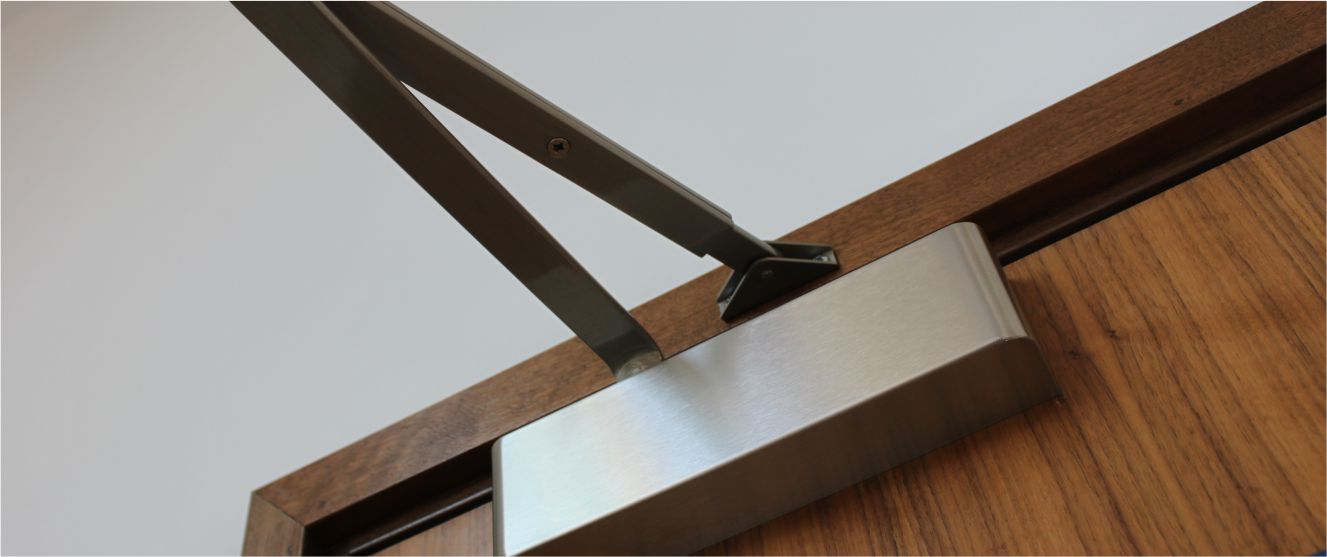
It is essential that you choose the right door closer for each individual door in a commercial or public sector building, and that this is done on a structured basis which considers the location of the door, the traffic flow and the type of people using the door. This will develop a picture of the size and weight of door you need and an appropriate rating of door closer in order that the speed and force can be suitably adjusted. This will result in people easily and safely passing through a door, the building functioning normally and there being no issues raised in terms of:
- Safety – doors slamming or being left open as a fire risk
- Security – doors not closing properly and engaging a lock
- Energy efficiency – doors being left open and contributing to heat loss
- Accessibility – doors being hard to open and close
This last issue is perhaps the most common problem we encounter with door closers, and doors suddenly becoming hard to open can be caused in various different ways:
- Poor maintenance – A door closer is a hydraulic mechanism and therefore requires some looking after. This primarily involves using hydraulic lubricant to ensure this mechanism works effectively. If this isn’t added, or it dries up or becomes clogged with dirt and debris over time, the door closer and the door will gradually become harder to operate.
- Incorrect adjustments – Most door closers have the ability for the valves to be adjusted to increase or reduce the force required to open the door. This is a case of trial and error until you find an appropriate force to match the usage needs and location of the door. If these valves are too tightly adjusted it could create too much resistance than is needed, making the door hard to open.
- Wrong door size – If the door closer rating is too small for the door itself, it won’t have the capacity to effectively control the door opening and closing, making this process more physically demanding for whoever is passing through the door.
- Cold weather – In cold weather the viscosity of the hydraulic lubricant can thicken, and this can cause more resistance to be found when using the door closer.
- Door misalignment – Over time you may find that the door drops through continual use, or the screws on hinges, mounting plates and the arm pivot links become loose, worn or rusty. This places physical strain on the door closer and makes it harder to operate.
- Internal damage - Heavy use of a door closer can break the internal springs, seals or the valves within the door closer unit. This can cause the fluid to leak and may result in the mechanism jamming and becoming harder to operate.
How to prevent a door closer from becoming difficult to open
There are a number of small maintenance tasks you can perform to prevent these issues:
- Inspect – Keep a close eye on the door closer during routine checks, and make sure there are no oil leaks, installation issues or signs of damage. This can also be noticed through the door closer making noises when the door opens and closes.
- Maintenance – On a regular schedule you should open up the door closer and clean it of dirt and debris that inevitably builds up. You can also check and replace the oil at this interval, while this is also a good opportunity to tighten screw assemblies and check valves, seals and springs.
- Adjust – Only adjust the valves of the door closer to suit the closing and latching speed you need. Over or under adjusting this can damage the door closer. You can also make seasonal adjustments to compensate for cold weather.
Check out our range of door closers at MB Direct.