What is a spring door closer?
In some residential or commercial settings there may be a need to control the closing of a door that experiences low to medium traffic and that is relatively lightweight. There may also be a desire to do this with a door closer that is small and discreet, in order to maintain an aesthetic appeal for the interior of a building. In such circumstances a spring door closer is the ideal solution for controlling a closing door and hence managing security, safety, noise and energy efficiency.
The spring door closer – understanding the basics
The spring door closer is a simple and effective device that uses the tension of a spring mechanism to close a door. It is a very easy device to install and the main hinge is located on the outer face of the door frame adjacent to the door. The spring door closer is better suited to lightweight internal doors.
What does the spring door closer look like?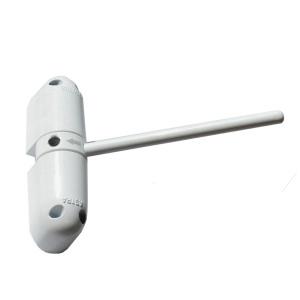
When you purchase a spring door closer it is usually supplied already joined together, so essentially there is only one part. However, the spring door closer consists of a hinged bracket that is attached in a vertical orientation to the door frame and a pivoted arm that is positioned in a horizontal orientation across a section of the door. The hinged bracket that is attached to the door frame also contains the spring that is used to control the tension of the door closer. Some models of spring door closer may also contain a separate small bracket that is attached to the door. This helps to hold the tensioned arm in place as it moves to control the door closing action.
How does a spring door closer work?
The spring door closer is a very simple device that is effective and consistent. The tensioned arm that is positioned flat across the initial section of the door nearest the wall will pivot in the same horizontal orientation as the door is opened. The pivoted action of the arm helps to compress the spring contained in the bracket attached to the door frame and provides energy which is stored in this spring. When the door is released to close again, this stored energy is also released and provides the force needed to close the door.
Because there are so few features and parts to the spring door closer it is very reliable and consistent.
The benefits of the spring door closer
- Affordable - Installing a spring door closer is a low-cost solution to automatically closing a door.
- Easy to install - A spring door closer is very easy to install.
- Low-maintenance - The spring door closer requires very little ongoing maintenance.
- Secure – The spring door closer effectively closes a door and is reliable and consistent in ensuring the door remains closed.
- Adjustable – It is possible to adjust the tension of the arm on the spring door closer, according to the thickness or weight of the door, although this doesn’t quite give the same level of control as a more expensive overhead door closer may, for example. It should also be noted that the spring door closer may not be suitable for heavy or high-traffic doors, where a more robust form of door control may be required.
- Discreet – The spring door closer is small and discreet, so is good for modern buildings or settings where aesthetics and visual appeal is important.
- Visual appeal – Some models of the spring door closer can also be supplied in a range of finishes that can be used to match with other elements of your door furniture, such as handles, hinges and surrounding features like light switches and plug sockets. Spring door closers can be supplied in white, silver, brass and chrome.
How to install a spring door closer
Installing a spring door closer is very quick and simple and the only tools you will need are a screwdriver and an Allen key.
- Position – Mark the position for the hinge bracket on the door frame. This should be central for a heavier door, but can be higher for a more lightweight door. You should also ensure that the pivoted tension arm will be lying on a flat section of the door, as this is where it will do all its work in closing the door.
- Secure – Use a screwdriver to secure the bracket to the door frame.
- Arm – Use the pivot to position the arm across the initial section of the door.
- Tension – Use an Allen key to adjust the tension on the bottom of the hinge bracket. This will involve an element of trial and error, so you will need to keep making adjustments and trying the door until you achieve the right amount of tension.
MB Direct have a range of door closers available online, including a spring door closer.