What is a deadlock?
Home or business security is one of your most important considerations and it can be difficult to choose between the different types of lock available, particularly if the differences between them are not obvious. The most common types of lock for any kind of domestic or commercial door are a deadlock, deadbolt or a sash lock. In this guide we will look closely at the deadlock, how it works and why it might be the most suitable type of lock for your home or business.
Understanding the deadlock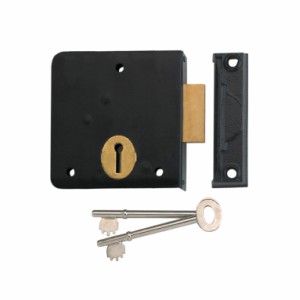
A deadlock is a very popular type of door lock. It requires a key for the purpose of locking and unlocking a door, and which must be used on both sides of the door, but it provides a good level of security because it engages with the door frame. This makes it harder for a potential intruder to gain access to the property without a key. Other types of lock use a spring to hold the lock in place, such as a latch bolt, making them easier to manipulate or force open. For this reason deadlocks are very popular for use on external doors.
Deadlocks are used for both residential and commercial properties, and because they require a key for both locking and unlocking a door, ie. on both sides of the door, they act as a good barrier to forced entry and hence improve the level of security for the property. They are sometimes known as mortice deadlocks, because they are installed in the leading edge of the door in a morticed section, and lined up to fit into the door frame.
What does a deadlock look like?
There are several important components in a deadlock system and these each combine to provide the deadlock with an excellent level of security. The main parts of the deadlock are:
- Cylinder – This is where the key is inserted and turned, and the cylinder will then engage with the bolt to lock or unlock the door.
- Bolt – This is a solid metal bar that extends from the lock into the door frame. This is engaged or disengaged according to whether the door is locked or unlocked, and hence this metal bar is the essential factor in creating a secure barrier to prevent unauthorised access.
- Keyhole – This is the external point on the door face in which the key enters the locking mechanism, and the grooves in the key engage with the cylinder to then engage with the bolt.
How does the deadlock work?
Because the rigid bolt in a deadlock will only move when the key is inserted and turned, this makes it much harder for a door to be forced open, ie. for an intruder or anyone without authorisation, to bypass the deadlock and gain entry. So the deadlock is designed to resist tampering and attempts to force entry, and this differs to some spring-loaded latch door locks, which can be forced open and which, therefore, are only really suitable for internal doors.
The deadlock will be positioned so that it directly engages with the door frame. This is what gives the deadlock an enhanced level of security and which provides a strong and robust connection that is much harder to breach without a key. Some deadlocks are also manufactured with a hardened steel bolt, which provides even greater security and reduces the risk of bypass, manipulation and forced entry even further. So when the deadlock is engaged, the bolt extends into a metal plate or casing fitted within the door frame. This is not visible when the door is closed and locked and because the bolt is fully engaged in the door frame, it is very hard to tamper with or to force open.
The benefits of using a deadlock
Installing a deadlock in your home or business will deliver a number of benefits, these typically include:
- Better security – Deadlocks provide a solid barrier to prevent a door being opened because they extend the locking bolt into the door frame. They can only be unlocked using a key and are therefore very difficult to breach. Hardened steel bolts in a deadlock system improve this level of security further.
- Durability – Deadlocks are strong and robust and are very hard to tamper with or pick. This means that once fitted, a deadlock should be effective for a long time.
- Low maintenance – There are not too many moving parts to a deadlock so there is not much that can go wrong. This means a deadlock is reliable and provides peace of mind that your security is effective and trouble-free long term.