Types of rooms ideal for a door closer
Door closers may not be considered an essential functional element of a building design, but architects and interior designers are very much aware of the practical benefits and legal necessities of a door closer and their aesthetic impact. Door closers play an important role in how a building performs, in terms of fire safety, security, accessibility, noise control and energy efficiency. But door closers don’t necessarily work in certain locations, and you have to consider a number of different things when assessing which rooms and locations need a door closer.
What is a door closer?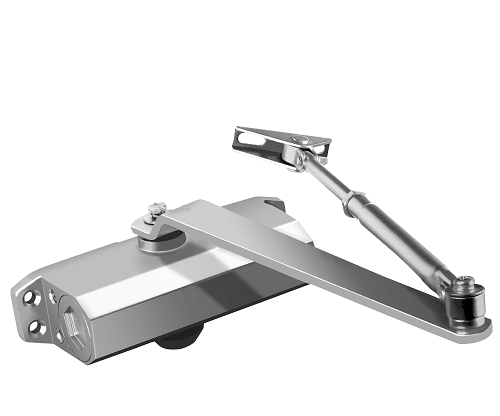
A door closer is a mechanical device which ensures a door closes automatically once opened. They are installed as part of the door mechanism to ensure a door closes properly and hence are essential in preventing the spread of fire, for enabling security measures to be properly implemented, for assisting people with mobility issues and for maintaining noise levels and stable temperatures in a building. A door closer also controls the closing and latching speed, and hence ensures a door closes securely.
Architects will include a door closer as part of the essential fabric of a building’s design, and they are commonly seen in commercial buildings, public buildings, healthcare facilities and residential buildings. There are various different designs of door closer, the most popular ones being overhead surface-mounted door closers and concealed door closers, which can be fitted into the leading edge of a door or in the floor.
Where would you install a door closer?
There can be various reasons for installing a door closer, as listed above (safety, security, accessibility, noise control and energy efficiency) and the main driver will be building compliance. This may dictate that certain rooms and locations, such as a corridor in a high traffic building, must have a door closer when ordinarily you wouldn’t have identified this need. But here we have listed the key rooms and locations where you would normally install a door closer, and we have separated these into different building types also:
Commercial and public buildings
- Fire doors – Any door that is identified as a fire door must have a door closer installed. This ensures there is a self-closing mechanism which acts to contain the spread of smoke and fire.
- Main access and egress doors – The main entrance to a building would normally have a door closer as it acts as an important security point, and also helps to control the temperature and energy use.
- High-traffic corridors – Usually seen in educational facilities, hospitality settings and retail locations, door closers are useful in areas of constant use, but they need to be heavy duty and more durable door closers.
- Welfare facilities – Where you would need to ensure the privacy of people – toilets, showers and changing rooms – you would need to install a door closer to automatically ensure it closes and stays securely closed.
- Conference/board rooms – Where privacy and confidentiality is important, door closers help to reduce noise travel.
- Server rooms – A door closer is useful for maintaining stable temperatures in certain rooms such as server rooms, laboratories or medical rooms.
- Storage rooms – Where rooms are used for storage of hazardous chemicals or confidential information, door closers can help to manage unauthorised access.
- Healthcare facilities
- High-traffic corridors – Door closers help to reduce air transfer and hence help to keep a building sterile, as well as preventing cold air and noise travelling within a building.
- Wards – Whether patients have individual rooms or share an open ward, you would install a door closer at the entrance to the ward as a measure to control safety, security, privacy and temperature.
- Operating rooms – A door closer can help to maintain stable temperatures and air pressure. Which could be critical in some operating environments.
Residential properties
- Main entrances – Where access control systems are used it is essential that a door closer securely shuts a door so that it isn’t left ajar. Access control systems manage security and safety in multi-use apartment blocks so a door closer ensures someone doesn’t leave the door open. Any doors where access is required via a keypad, card reader, smartphone or biometric feature would need a door closer to ensure a secure latching close is achieved, as only then will a bolt securely lock the door.
- Internal doors – Safety regulations dictate that internal doors in a house of multiple occupation (HMO) are fire doors. For this reason these must be fitted with a door closer.
- Kitchens – It is common to install a door closer on kitchen doors to restrict the spread of noise, temperature and odours.
In addition to the types of rooms listed above, door closers would normally be used on external or internal doors that are subjected to wind tunnels. These can sometimes slam a door shut and cause damage, noise or injury. A door closer works to overcome this force and ensure a more controlled closing action of the door. This type of location could be found in a commercial or public building, a healthcare facility or a residential property, and hence applies to all of the above.