Latching speed vs swing speed - what is the difference In door closers?
There are various important functions for a door closer in a commercial building. It helps with safety, security and compliance, as well as managing temperature and noise control. A door closer ensures a door is properly and securely shut, but two factors which have a big impact on this are the latching speed and the swing speed, also known as the closing speed. Ensuring a door is properly closed every time it opens is not the only function of the door closer, as we have established with the uses listed above. But to be properly effective in all these various benefits, the user needs to adjust the latching and the swing speed, so it is important that the difference between these is properly understood.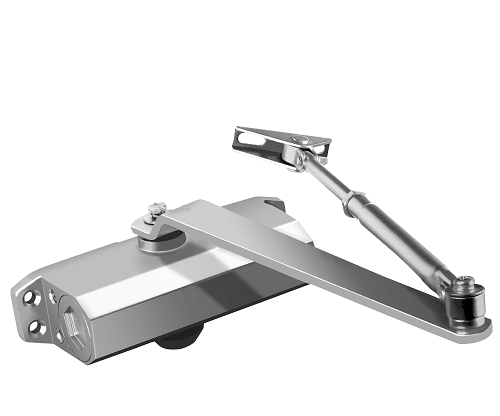
What is the latching speed?
Modern homes are often fitted with anti-slam features, particularly for things like kitchen cupboards and drawers. These ensure the last few moments of the closing cycle are controlled to ensure a soft-close. This prevents noise and damage and makes the environment generally more pleasant, and latching speed works in a similar way. A latch is the part of a door that holds a closed door in place and prevents it drifting back open. An effective latching is therefore essential for keeping a door shut and the various benefits this brings.
If a door closes too fast, the excessive force can lead to the door bouncing out of the frame and the latch not engaging. The door will then sit slightly ajar and will not be securely closed. If a door closes too slow, there will not be sufficient force for the latch to be engaged, and to securely keep the door closed. Again, this leads to the door sitting slightly ajar. So the latching speed of the door closer is controlling the speed of the door in the final few degrees of its closing arc, and ensuring it reaches the fully closed position whereby the latch clicks and secures it in place. This is essential for many reasons, but most importantly, fire safety compliance.
How does latching speed work?
Latching speed has to overcome the resistance presented by the door latch itself and any door seals or air pressure that may be present, but has to be slow and soft enough not to slam and to ensure the door doesn’t overcome the capability of the latch, and then bounce out of the latch. So the latching speed is adjusted by making minor changes to the screws which control the hydraulic valves in the door closer, and therefore with the door and the door closer fully installed. These valves can be tweaked incrementally until exactly the right balance of force is achieved. Having a reliable latching speed means you have tested the closing action multiple times to ensure the latch is engaged at the end of every closing cycle, and the door stays securely closed.
What is swing speed?
The swing speed, or closing speed, is the speed of the door closing action from the maximum achievable opening angle, which could be up to 130 degrees, to the point at which the latching speed control takes over in the final few degrees of the closing cycle. So the swing speed is the speed at which the door closes from the fully open point. The swing speed has to overcome factors such as the size and weight of the door and any external factors such as winds or draughts, and the primary aim is to ensure a person has sufficient time to pass through the door. So the swing speed has to be adjusted to take into account those factors listed above, as well as the type of traffic that is expected to use the door.
Why is swing speed important?
Swing speed is important because you need to ensure the door closer is effective in controlling the door closing action so that it is safe and secure, and is appropriate to the location and the nature of the building. You will want a door to close quicker in places were there is a security issue, or cold temperatures can impact on energy efficiency and comfort. And you will want a door closer to close the door slower where people have mobility or accessibility issues, such as in healthcare settings or in a care home. Many commercial buildings will require a balance somewhere in between, and where there is a building with lots of traffic, such as a school or a hospital, the door closing action has to allow for the fact that a high volume of traffic is using the door and the swing speed is how you would control this.
Adjusting latching and swing speed on a door closer
The main body of an overhead door closer is attached to the door itself. Within this main body are a set of valves, and there are separate valves for controlling the latching speed and the swing speed. These can be easily adjusted on a trial and error basis. So you need to keep testing the door closing action to check your adjustments create a suitable swing speed so that people can easily and safely pass through the door, and then so the door securely latches and stays shut. These fine tuning adjustments are critical to the user experience, but also in terms of the various important benefits of the door closer.
You can choose a door closer from our range at MB Direct and order online today.