Keyless door locks for shared spaces - offices, gyms and workshops
When creating or developing a shared space, security becomes a much bigger issue and something that is harder to control. Many people using a shared space, usually at different times and often for different purposes, introduces multiple variable elements which can have an impact on security. Shared spaces are much more common in the 21st century as people understand the benefits of creating efficient spaces that are utilised 24/7. These can include co-living properties (HMOs, student accommodation, Airbnbs, serviced apartments) and co-working spaces (studios, offices and creative spaces) but also include more traditional shared spaces, such as commercial offices, a gym or a leisure centre.
Although these are shared spaces that cover many different activities and operations, they all share a common element; security. They all operate on a flexible basis and have people coming and going at their leisure, and on a 24/7 basis. So a building has to be open and accessible around-the-clock and needs to have flexibility in how people enter and exit. At the same time, security has to be very robust and there needs to be a system whereby a record is maintained to monitor who is in a building at any particular time. This is where keyless door locks come into their own.
What is a keyless door lock?
A keyless door lock is a security system which removes the need for a physical key, and therefore reduces some of the security risks and limitations a physical key presents. There are various keyless security credentials which can be used to replace the physical key, which include fobs and cards, inputting a PIN code in a keypad, video and voice recognition, smartphone apps and biometric features.
Keyless door locks are designed to enable entry on the production of security credentials which effectively prove a person’s authorisation to enter a building at any given time. Keyless door locks are often linked to access control systems which carry out the same function, but are backed up by software which allows for remote monitoring and management of access permissions, and the collection of real-time data to record and monitor people movement in and out and within the building. These vary in sophistication according to the needs of the business or operation.
The benefits of keyless door locks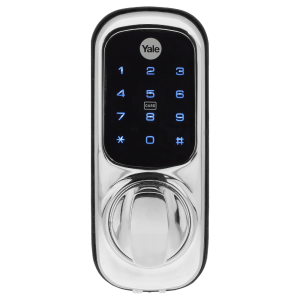
Regardless of the type of building that uses a keyless door lock, there are common benefits which can enhance security and convenience:
- Lost keys – Removing the need for physical keys reduces the risk of keys being lost, stolen, forgotten or copied.
- Remote access – Access can be granted remotely, which enables temporary or urgent access to be granted for visitors, contractors or people who turn up unexpectedly. Authorisation can also be instantly revoked in the event of a security breach, or a person leaving a business or a membership scheme at a gym, for example. There is no need for a physical handover of keys.
- Enhanced security – Keyless door locks are usually tamper-proof and can include encryption protocols to prevent unauthorised access. Access credentials can also be changed instantly and more easily communicated if there is a security breach, compared to calling-in and re-distributing physical keys.
- Convenience – Entry can be granted with a quick flash of the required access credentials, rather than fumbling around for a physical key and turning it in a lock. This is ideal for high traffic areas, but also fits in with various seamless, smart systems found elsewhere in everyday life.
- Remote monitoring – It is possible to track who enters and leaves a building and when.
- Customisation – People can be granted temporary access with one-time codes or access credentials, which only work for a limited period, or within certain hours of the day, such as contractors carrying out work in a building, or people booking an Airbnb or serviced apartment for a weekend or short break. This same concept can also work for zones or rooms within a building, enabling access for people to certain rooms at certain times, according to security needs.
- Flexible spaces – A building can effectively be open 24/7 but also maintains robust security around-the-clock. This enables spaces to be used on a flexible basis outside of standard hours, a great benefit which encourages business growth and which can attract a higher standard of employee to a business, or more members to a gym or leisure centre.
- Lower maintenance costs – There are lower costs associated with replacing physical keys or with manual administration of the system.
- Auditable – Security can be monitored and audited easily to identify security breaches, which can help to reduce insurance costs.
- Contactless – Keyless entry systems are contactless and hence also offer hygiene and accessibility benefits, and also contribute to lower maintenance costs.
So keyless door locks are a convenient security solution for shared spaces and provide ease of management and flexibility for spaces where people like to come and go as they please. Access credentials remain unique and robust and can be adapted to suit changing and evolving circumstances in a building. There are various different designs of keyless door locks, so check out our range at MB Direct and choose the right security solution for you.