How to stop door frames from being damaged by heavy doors
Door frames perform an important function in taking the weight of a door, keeping the door stable and enabling the door to open and close freely on a long-term basis. But the repeated cycles of this action can cause wear and tear to a door frame. This is made even worse if a door is too heavy for the frame or is being repeatedly slammed, either by misuse or by catching a wind tunnel. A damaged door frame can quickly start to impact on the functioning of a door, which could lead to structural damage to walls, or the door, and to issues with security, energy efficiency and health and safety. It can also influence how traffic flows throughout a building.
You can protect a door frame from damage by ensuring a door is the right size for the door frame, by using cushioning or dampening fixes on the door frame or by structurally reinforcing the door frame. But by far the easiest and most effective way to prevent door frames being damaged by heavy doors, is to install a door closer.
How does a door closer protect a door frame?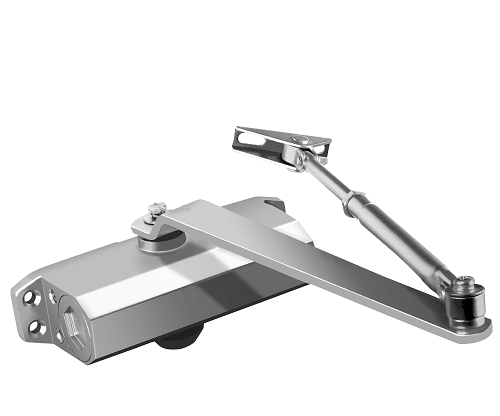
There are many different styles and designs of door closer, but they all perform a similar function. They use hydraulic or pneumatic mechanisms to control the speed of a door opening, but mainly to control it closing, to ensure it comes to a controlled stop and engages a latching action. This means a door performs a ‘soft-close’ cycle and reaches a rest position that properly and securely latches the door and therefore ensures it stays shut.
A door closer prevents the door slamming, which is the main cause of damage to a door frame, through the timber splitting or damage to the hinges as a result of the excessive force. There are other features of a door closer which make them even more effective in preventing damage to door frames, so let’s look at these features in detail:
- Controlling the closing speed of the door – A door slamming involves excessive force which exceeds the force a door is designed to ordinarily withstand. A door closer manages this closing action to control the force and speed under which the door closes. This ensures the door closes properly, bearing in mind a heavier door requires more force in order to close, but also controls the closing action so the door doesn’t close with excessive force.
- Adjustable latching speed – Most door closers have a separate function which allows you to control the ‘latching action’, this is the final few millimetres of the door closing which ensures the door engages a latch and therefore stays shut. If this action is too fast, the door will bounce out and not latch properly. If this action is too slow, the door won’t have enough force to engage the latch. If the door doesn’t latch properly, it is free to be repeatedly slammed shut by wind and draughts, which can be a noise nuisance and will lead to damage.
- Backcheck – This is a feature which acts like a brake and uses hydraulic resistance to ensure the door can’t be opened or closed with excessive force. This prevents damage to the door frame, but also prevents the door or door handle being damaged, for example when opened aggressively and slamming into a wall. This is particularly useful for external doors which are more likely to be affected by environmental conditions.
Door closers are ideal for preventing wear and tear as well as damage to doors and door frames
Doors and door frames are subjected to significant wear and tear, purely because of how many repeated opening and closing cycles they go through. This often transfers the force of slamming a door open or closed to the door or door frame, or to items such as the hinges and screws which hold a door in place within the door frame. A door closer helps to slow down this wear and tear and ensures the key components don’t get damaged or that natural wear and tear is not accelerated.
It is therefore essential that door closers are installed to regulate the opening and closing action of a door, and to prevent damage, as well as to enhance security, health and safety, energy efficiency, traffic flow and accessibility. This works alongside other important factors such as choosing the right door size and the right type of door closer, installing the door correctly and instructing people on best practice in terms of using internal and external doors in certain locations. So check out our range of door closers at MB Direct and choose the right door closer for your location and application.