How to make the most of limited space inside a safe
Investing in a safe is a very important decision for any family or business. Home and workplace security is essential and investing in a safe is usually the outcome of a risk assessment that has considered a number of factors and decided that there is sufficient risk to put suitable safeguards in place. A safe is able to protect items of value from theft, being misplaced, fire damage and water damage. These can be items of financial value, but also items of personal value, sentimental value, commercial value and legal value.
Of course it is difficult to replace items of high financial value, but it can be impossible to replace some items that hold personal or sentimental value, while items such as passports or property deeds are replaceable, but this can be time-consuming and expensive. So investing in a safe is always the right thing to do, but there are many different sizes and styles of safe to choose from, and furthermore, your security storage needs may change over time. This could mean that the size of safe you initially bought is no longer suitable. It is not always practical or financially viable to simply buy a new safe, so ideally you want to maximise the space you have available in your existing safe. Here are some tips on how to do this.
Tips on how to maximise space in a small safe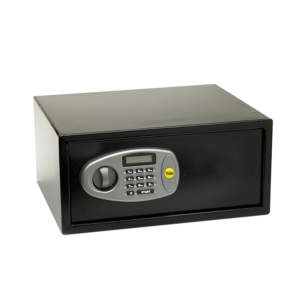
- Prioritise – It may sound obvious, but the first thing to consider is what are you actually storing in a safe and does it still need to be there? It is common to store documents or items we once considered valuable, but which may no longer be. This could be paper documents that are now stored digitally, or documents relating to policies which are no longer valid. A regular review of your safe contents is always a good idea so that you can prioritise what really needs to be in there, and to make sure you have enough room for everything.
- Organise – Rather than simply piling everything into the open space of a safe, using organisers with pockets, pouches, baskets and trays can help to separate key items and means more usable space can be created. This also makes important things easier to find when you need to.
- Storage techniques – Clever storage techniques include using magnets or hooks on the walls for metallic items such as keys or jewellery. This takes volume off the floor of the safe and opens up more space, essentially meaning you are being more efficient and using all available space within the safe. Another storage technique is separating items into bags so that they can be laid flat and can be easily found.
- Add shelves – The clever use of shelves can minimise empty space and ensure every inch of space is properly utilised. Ideally these will be adjustable shelves so that as your security needs change you can move shelves to better store and organise the safe contents.
- Remove packaging – We naturally keep packaging for expensive items, and particularly electronic devices. But we don’t really need them, certainly after we have had them a long time and there is no prospect of returning them. So removing packaging and just having the valuable item stored may free up some usable space.
Other factors when using a small safe
- Anchor the safe – It is important that a small safe is either locked away in a cupboard or drawer, or is anchored to a floor or wall by an anchor bolt. A small safe that is visible and portable is essentially making a thief’s job much easier, as all your valuable belongings are kept together and are easy to steal. Because you have a small safe, it should be easier to conceal, or ideally, to anchor.
- Insurance rating – If you are finding that you need a bigger safe, the chances are the contents of the safe are more valuable also. So is the insurance rating of the safe still applicable? This could be very important if there is a security breach and your safe is deemed not to be suitable to protect your belongings.
- Fire and water ratings – Make sure your small safe has suitable fire and waterproofing ratings for the contents you are storing.
- Think about dampness and moisture – If a small safe is not water resistant, don’t store it in a location that could become damp or have high humidity. This could impact on documentation or some electronic devices and digital storage.
- Consider an upgrade - While this might not be the solution you wanted, sometimes the risk factor is too high. Your priority should always be to suitably protect your valuable items. A review of your safe contents might establish that your safe is too small, or doesn’t have a sufficient rating for fire, water or insurance. If this is the case, you need to invest in a new safe.
At MB Direct we have a wide range of different safes in terms of size, style and locking mechanisms. Check out our range and choose the type of safe that suits you.