How does door size affect door closer performance?
The size of your door has a direct impact on the performance of your door closer, and hence you need to choose the correct power rating for the door closer you want. In simple terms, the larger or heavier your door, the higher power rating you are going to need. This is usually measured one to six. If you get this wrong, the problem you will encounter is an undersized door closer failing to shut a door properly. Or you may encounter the opposite problem, whereby an oversized door closer closes a door too powerfully and makes it difficult to actually open a door.
In this guide we will explain the impact of door size on door closer performance, whether they are overhead, floor-mounted or concealed door closers, and why it is important to choose the correct power rating for your door closer.
Understanding the impact of door size on door closers
There are four main ways in which the size of a door will impact on door closer performance. These are:
- Closing force – A large and heavy door has more mass behind it and is more resistant to wind force also. This means a door closer will need a larger power size to overcome and control these forces.
- Latching – This is the action of securing the door in the latch. If a heavy door closes too fast or with too much force it will bounce out of the latch and the door won’t be secured. It may also damage the latch. If a door closes too slowly or doesn’t have enough force, it won’t engage the latch and therefore the door won’t be securely closed and may drift back open.
- Opening resistance – If a door closer has a higher power size it becomes harder to open, even if the door itself is not particularly large or heavy. This can cause accessibility and fire safety issues.
- Wear and tear – Mismatching your door closer to door size, as per the example above, can overwork the door closer and therefore damage the mechanism because it is always working at maximum capacity. This can lead to broken seals, fluid leaks and broken springs.
It is therefore important to understand the power size of door closers and how they relate to the door itself.
Why power size matters in door closers
Power size in a door closer is the rating given to a specific model of door closer. This is from one to six, with one being the least powerful door closer and six being the most powerful. But it is important to understand what power size is and how it relates to the size of your door.
A higher power size does not make a door close faster, it means there is more force required to open and close it. The closing speed of a door can be controlled by the hydraulic valves in the door closer itself, so the closing speed is a separate issue that is not determined by the power size of the door closer, nor the size of the door. It is therefore essential that you choose the right power size for your door closer, and this is where door size comes into it.
How to choose the right power size for your door closer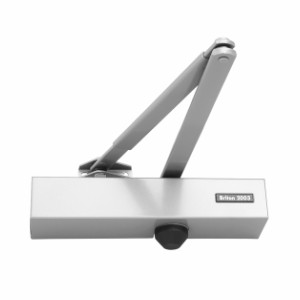
Different models of door closer may have specific manufacturer recommendations in terms of power size and the door size and weight they are compatible with. But in general terms, there are common door weights and sizes that are compatible with the standard EN 1-6 power sizes for door closers.
- Power size 1 is for maximum door widths of 750mm and maximum door weights of 20Kgs
- Power size 2 is for maximum door widths of 850mm and maximum door weights of 40Kgs
- Power size 3 is for maximum door widths of 950mm and maximum door weights of 60Kgs
- Power size 4 is for maximum door widths of 1100mm and maximum door weights of 80Kgs
- Power size 5 is for maximum door widths of 1250mm and maximum door weights of 100Kgs
- Power size 6 is for maximum door widths of 1400mm and maximum door weights of 120Kgs
- Power size 7 is for maximum door widths of 1600mm and maximum door weights of 160Kgs
So remember, the higher the power size of the door closer, the harder it will be to open the door. This causes accessibility and safety issues, and can cause wear on the door and the door closer. In general, larger, heavier doors require more force to open and close them fully and to latch properly, so they need a higher power size of door closer. It is also important to note that power size 3 is the minimum requirement for a fire door.
In simple terms, for a common, non-fire-rated internal door you could use a door closer with a power size of one to three. If you have a heavier and larger door which is subjected to wind resistance, you should opt for a power size of four to seven. And any fire door has to have a door closer of power size three or above.
You can check out our range of door closers at MB Direct.