How do you know if a door closer is strong enough for your door?
Door closers are an important element of interior design, even if they are purely functional rather than adding any great aesthetic quality. The door closer is an essential feature for commercial buildings because it helps traffic flow, but it also provides important benefits for security, health and safety, accessibility and energy efficiency. So it is important that we consider door closers whenever we are designing and fitting-out the interior of a commercial building.
But not every door is the same, and not every door services the same needs. Doors differ in terms of size and weight, while our needs differ in terms of our physical ability, where the door is located and how busy a building or area is. There are a number of factors which can affect the suitability of a door closer, and these all need to be considered together to make sure you choose the right door closer for your needs.
The benefits of the door closer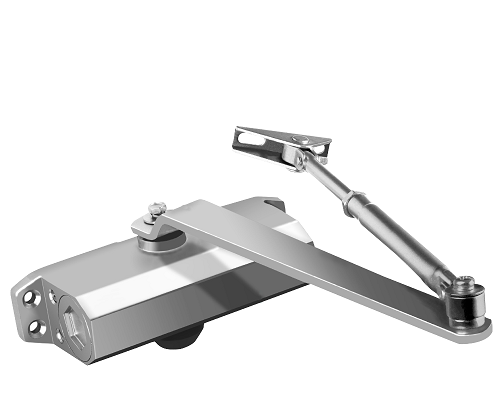
A door closer automatically closes a door once it has been opened and passed through. But it also provides benefits such as:
- Security – Ensures doors are closed and security locks and latches are engaged.
- Health and safety – The door closer controls the opening and closing speed so that it doesn’t slam and cause an injury or damage the door or wall. Doors must also close for fire safety compliance.
- Accessibility – Controlling the closing speed allows people with limited mobility to easily pass through the door, and because it closes automatically, they don’t have to physically turn to close it themselves.
- Energy efficiency – By ensuring a door closes securely and at the right speed, we can reduce thermal transfer and heat loss. This maintains stable temperatures in a room and reduces energy bills.
Bearing all this in mind, it is important that we choose the right door closer for the door we have and the needs we have. This ensures we enjoy all the above benefits and the building can be used comfortably and allows for good traffic flow.
What to consider when choosing a door closer
There are three key things to think about when choosing a door closer for your door:
- Opening force – Door closers control the opening force as well as the closing force. You need to match the force the door closer presents with the door size and ability needs of the people using the building.
- Closing force – Closing force and speed needs to match user needs and to provide all the benefits listed above.
- Latching force – This is the final section of the closing arc, and is the speed and force required to engage the door latch. This latch is what secures the door in the rested position and prevents it drifting open again.
Choosing a door closer for your door
These three factors come into play when we look at door closer force and power sizes. In simple terms, the larger and heavier your door, the more force will be required to open and close it, bearing in mind it needs to meet the security, safety, accessibility and energy efficiency needs of your building too. Door closers are manufactured to different power sizes and these correspond with maximum door weights that a door closer is therefore recommended for. Standard power sizes for door closers are:
- Power size 1 is for maximum door weights of 20Kgs and maximum door width of 750mm
- Power size 2 is for maximum door weights of 40Kgs and maximum door width of 850mm
- Power size 3 is for maximum door weights of 60Kgs and maximum door width of 950mm
- Power size 4 is for maximum door weights of 80Kgs and maximum door width of 1100mm
- Power size 5 is for maximum door weights of 100Kgs and maximum door width of 1250mm
- Power size 6 is for maximum door weights of 120Kgs and maximum door width of 1400mm
Most door closers allow you to adjust the opening, closing and latching speeds of the door, but the force is a different matter. If the door closer only has a power size of 1, it won’t have the capacity to open a door weighing 100Kgs and with a width of 1250mm.
So by using this table and checking the power size of a door closer, you should be able to check whether it will be suitable for your door’s size and weight. This should also take into account the user needs as outlined above, but also factors such as air pressure and where the door is located. If a door is close to external winds, it may need a door closer with a higher power size to overcome these forces. Fire doors must also have a minimum power size of 3.
Check out our range of door closer at MB Direct and choose the right one for your needs.