Flush door vs standard door frames - what is the difference?
When looking at the interior design of a home or workplace it is important to consider all options and to find design solutions which suit the style, practicality and overall appeal of the property. This includes both the aesthetic appeal and the practical needs. Most design solutions cover both of these bases, while others lean more closely to one or the other. In terms of flush doors, for example, the popular appeal of this type of door is the flawless elegance of their understated fascia and how they sit on a wall and almost disappear from view. This does have some practical benefits, but the appeal is mostly in this sparse and seamless aesthetic. But how do flush doors compare to standard doors, and what are the main differences?
What is a flush door frame?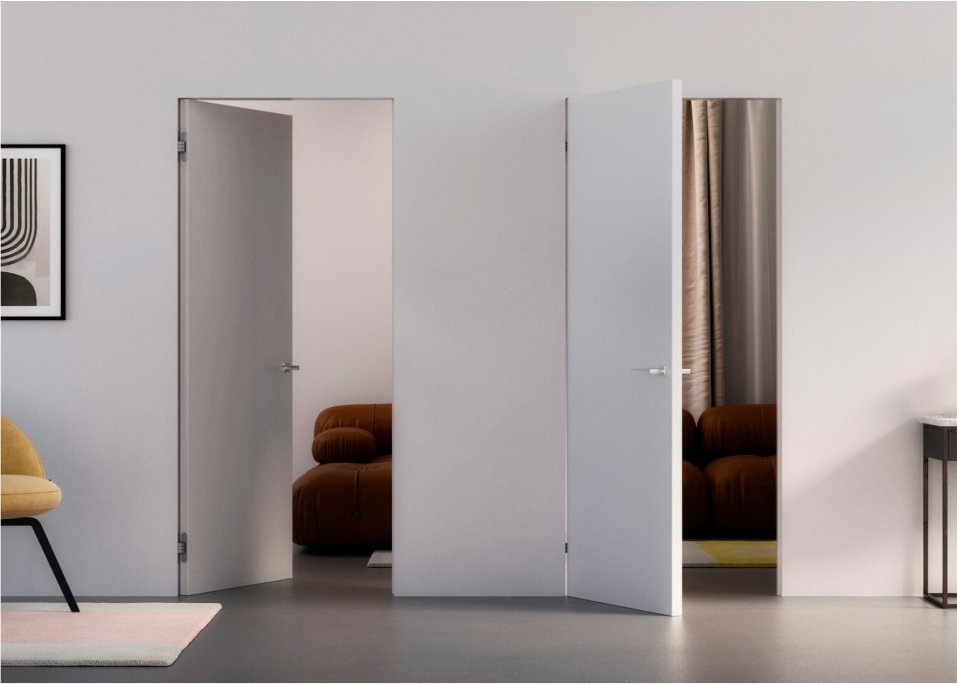
Flush doors are an increasingly popular type of door which is functionally the same as a standard door, but the difference is in its visual appeal. A flush door has no surrounding architrave and the door itself usually has a very flat profile with no panelling or mouldings. The smooth and flat surface of the flush door and the lack of architrave means the door can sit flush to the wall and almost disappears from view. There is effectively no transition from the door to the adjacent wall and hence the appeal is flawless, minimalist and extremely contemporary.
You would normally use a flush door for interior doors, such as for bedrooms or bathrooms in a domestic home, or for offices and meeting rooms in a commercial workplace, as the sleek and unobtrusive design is very modern and visually appealing. However, it is possible to use flush doors for exterior doors.
What is a standard door frame?
A standard door frame will be recessed back from the wall, but when the door and the architrave are installed within the door frame assembly, this structure will sit proud of the wall and hence will be visible. This is most often used in more traditional homes and in workplaces where the visual appeal is less important, such as in healthcare or education facilities, or in older domestic properties.
What is the difference between a flush door and a standard door?
The main difference between a flush door and a standard door is in the design of the door frame. With a flush door, the door sits in the frame in a position where it is ‘flush’ to the wall and completely aligned with the wall. Meanwhile, a standard door design would sit slightly back in the frame, or ‘recessed’. This makes it more visible as there is a noticeable, visible difference in the wall contours when looking either closely or from a distance. Where modern aesthetics are desired and there is a preference for visual appeal and chic, stylish designs – such as in a bar or restaurant, a styling salon or a hotel, or in a modern retail environment – flush doors may be preferred. Where this is not so important, a standard door would work perfectly fine.
Because a flush door has no surrounding architrave, the door frame is much more lightweight and is easier to install. However, another key difference is that architrave is often used to hide gaps and cracks between a door frame and the surrounding wall, much like skirting boards do between the wall and the floor. So if there is no architrave, as is the case with flush doors, the plastering quality has to be extremely good. There can be no gaps, cracks or blemishes as these will be exposed with a flush door and could impact on the flawless aesthetic you wish to create. With a standard door frame this is less of an issue because the surrounding architrave would conceal any blemishes.
So, in summarising the difference between a flush door and a standard door frame:
- Standard door frames are installed slightly differently and sit further back from the wall, and when the door is installed they sit proud of the door and are clearly visible.
- Flush doors are designed to sit fully flush with the wall when installed, so they present a sleek and flawless appeal.
- For flush doors, the plastering quality has to be very good, as this will remain visible.
- Standard doors can be used in any property but are more suited to traditional properties and those commercial spaces where practicality is more important than aesthetics.
- Flush doors are more suited to modern spaces where visual appeal is very important.
You can choose from a selection of sizes of flush doors and standard doors at MB Direct. Our range also includes fire doors. Browse our range and order online today.