Common door closer problems and solutions
Door closers have become a popular interior design solution for both commercial properties and residential properties. They have a myriad of benefits and have become a staple element of what architects and designers include in a typical design scheme. Door closers are designed to automatically close a door once it has been opened, but they also control the closing action of the door so that it is practical for the traffic and operations of the property. In addition to this, door closers provide health and safety benefits, security benefits, accessibility benefits and energy efficiency benefits. But like any other mechanism in a property, you do sometimes encounter problems.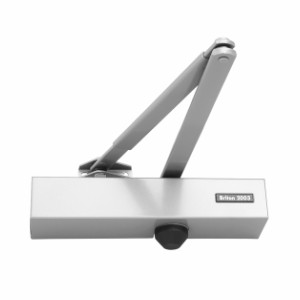
There are many different designs of door closer, and you can choose the style that suits your property. The most popular style of door closer is the overhead door closer, but whatever style you choose, the most common problems are often the same. In this guide we have broken down some of the most common problems encountered with door closers, and provided a suitable solution also.
- Hydraulic fluid leaks – If you see small drops of oil on the floor beneath the door closer, this is usually a sign that the inner seal within the door closer is worn or broken. It is sometimes a sign that you have over-adjusted the valves, but it is more likely to be the seals. This will occur if the door closer is old and has gone through many thousands of opening and closing cycles. So it could be time to replace the door closer, or you could just look at replacing the individual seal. While doing this you should also take the opportunity to clean the arm and body of the door closer, as there may be residual oil on these also.
- The door slams shut – It is very common for a door to shut too fast and in most cases this is why people install a door closer in the first place. But once installed, your door closer will still need adjusting to find the closing speed to suit your needs. The door closer mechanism will include valves which need to adjusted to increase or reduce the door speed, so this is a case of trial and error. It is usually a case of turning the screw clockwise to tighten it and slow the swing speed down. Doors can slam shut due to their location, ie. being located close to external areas where wind can cause a tunnel effect, so these adjustment valves are very important to prevent safety and noise hazards, but also so that the door closes under control to help with traffic flow.
- The door closes too slowly – The opposite problem is a door closing too slowly. This can cause a security issue, as unauthorised people can enter without permission, and can cause energy efficiency issues, as it aids heat loss. Sometimes a door closing too slowly also means there isn’t sufficient force to overcome the resistance presented by the latch, and therefore the door doesn’t shut properly and can blow open. This, again, causes security and energy efficiency issues. To resolve these issues you need to adjust the valves to increase the closing speed, and also turn the latching valve counterclockwise. This will increase the door swing speed in the final few degrees of the closing arc, and ensure it latches properly.
- The door requires too much force to open – Many door closers have a feature called ‘backcheck’. This is a hydraulic feature which acts as a brake to prevent the door flying open and slamming into walls or other objects. This can also be adjusted and sometimes is too high, so you need to loosen the backcheck valve so you still benefit from the backcheck feature, but you achieve the opening force you need to operate the door easily. You may also find that the power size of the door closer is incorrect for the door you have. This effectively means that you have a very powerful door closer on a door that is quite light in weight. Door closers have power sizes of one to seven, which can be compared to different door sizes and weights, and you can use a guide to find the right one.
- The door closer is making squeaking noises – This could be due to an oil leak and the parts within the mechanism are rubbing against each other, or because you haven’t put any lubrication in the mechanism in the first place. It could also be because of dirt and debris getting into the mechanism. In this case you should open up the door closer and clean inside around the arm and hinges. Then you can put new oil in the mechanism so that it works properly going forwards.
In some cases, a door won’t close properly because the door closer hasn’t been installed correctly, or a door closer isn’t effective because the door itself hasn’t been installed properly. Both the door and the closer need professional installation in order to work together. After that, most door closer problems can be resolved by adjusting the closing and latching speed and maintaining your door closer with lubrication and cleaning. You can check out our range of door closers available through MB Direct.