Common door closer installation mistakes to avoid
Door closers are an essential part of the fabric of a building and contribute in a significant way in terms of how the building functions and operates. Although they may not be thought of as important to a buyer or even a user of a building, door closers are always considered by people such as architects, surveyors and interior designers because of their impact in terms of safety, compliance, sustainability and overall functionality.
The benefits of a correctly installed door closer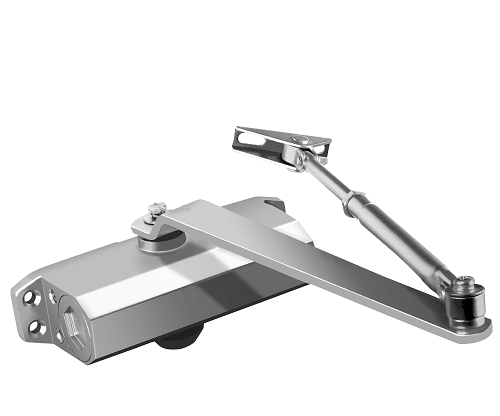
Installing a door closer can satisfy a number of requirements in a building. It will help with:
- Safety – Controlling how a door closes prevents incidents of people being struck by a closing door or trapping arms or fingers when a door closes under excessive force.
- Environmental – It will retain heat and prevent cold air entering a building by always closing a door and ensuring temperatures are stable.
- Compliance – Fire regulations insist that designated fire doors are always kept shut.
- Security – A properly latched door triggers security bolts or activates alarms, so you need to know the door will shut securely every time.
- Noise – Door closers help to prevent noise travelling around a building and also help to prevent doors slamming by controlling how fast they close.
So there are various different benefits to installing a door closer, but how you install the door closer can have an impact on how successful it is, and therefore how effective these benefits are. Here we will take a closer look at some common mistakes made when installing a door closer, and what effect these mistakes can have.
Mistakes to avoid when installing a door closer
Choosing the wrong size – Don’t make the mistake that ‘one size fits all’, you need to study this and consider factors such as the size and weight of the door, the amount of traffic using the door and the location of the door (ie. could it be subjected to external wind or excessive draughts?). These all have an impact on the closing force of the door and how effective the door closer is. Choosing a door closer that is too large or too small can mean the door closer can’t provide enough resistance to control the door closing action, or it doesn’t have sufficient power to close the door.
Poor alignment – Not positioning the door closer straight can lead to misaligned arms and therefore the door closer causing uneven wear each time the door opens and closes. This will accelerate the deterioration of the door closer and mean it doesn’t last as long as it should, and could mean it is also ineffective in closing the door securely.
Choosing the wrong mounting surface – A door closer has to be securely mounted in order to be effective. Door frames or the door itself could be weak or in poor condition, meaning you will always have problems with the door closer not closing the door properly.
Over-tightening adjustment screws – With the common overhead door closer you can adjust the valves to control the closing speed, with adjustments enabling you to make the door close faster or slower. Many people over-tighten these, which can damage the internal seals in the valves. This will lead to valves needing to be replaced eventually and can also lead to hydraulic oil leaks.
Not adjusting the door closing speed – This is perhaps the most common installation error with a door closer, and essentially means it is not doing its job. Leaving the closing speed as it is can mean the door closer is closing too fast and slamming shut, or is closing too slow and not properly latching. This can lead to damage, noise, safety issues, security issues and temperature control issues. Just small adjustments to the screws can change the valves and make a big impact on closing speed so the door closer operates to suit you.
Not testing the door closer multiple times – Once a door closer is installed and the screws adjusted to suit your needs, you need to test the door closing action several times to ensure it operates consistently and effectively, ie. the door closes smoothly, at the right speed and there is secure latching on every cycle.
Wrong type of door closer – Don’t assume an overhead door closer is the only type, although it is easily the most common. There are also concealed door closers, floor door closers and spring door closers, which might be more suitable for your needs.
Think about location – You need to ensure a door closer isn’t mounted in a location where it could be damaged or tampered with. If this could be an issue, it may be more suitable to choose a concealed door closer which can’t be seen or tampered with. Common overhead door closers are not discreet, and sit externally to the door, which can mean they protrude close to walls in tight spaces. Make sure there is sufficient space for the door closer to operate safely and effectively.
Choose a door closer from MB Direct
At MB Direct we have a wide range of door closers to choose from, so check out our range and order online today.