Choosing a door closer for fire doors
Door closers are essential for automatically shutting a door in a commercial building. This helps with traffic flow, wear and tear, security, energy efficiency, noise control and accessibility. But in a commercial building it is also essential that doors are properly closed in order to limit the spread of fire and smoke. Choosing the right type of door closer to ensure this compliance is therefore very important and a central focus of consideration when designing and fitting out a commercial building.
What is a fire door closer?
Different commercial buildings face different requirements for door closers, based on the volume of traffic and the size and location of individual doors. But a common thread between all commercial buildings is that fire door closers are required for regulatory compliance. A fire door closer ensures a fire door automatically closes after being used. This prevents the spread of fire and smoke, at least for a minimum period, to allow people to vacate the building and to avoid the effects of fire and smoke.
A fire door closer is a mechanical device attached to a door, and is installed in order that it controls the door closing action and ensures it closes safely and securely. It has to be effective, and therefore you can choose a type of fire door closer according to its ability to reliably close a door and keep it closed. This is a basic requirement of a fire door closer in order to keep occupants of a building safe from fire.
What to consider when choosing a fire door closer
There are different types of fire door closer available, including overhead door closers, concealed door closers and spring door closers. When choosing the right type of fire door closer for you, it is important to consider issues such as:
- Building type
- Traffic volumes
- Functionality
- Fire safety compliance
Building type and traffic volumes dictate that a fire door closer needs to be robust and durable, in order to cope with the environmental factors presented by a building and the level of footfall using the building. Door closers can be categorised according to the frequency of use, ie. low, medium and high volume. And therefore you can choose the type of door closer which matches the type of commercial building you have – retail, hospitality, education, healthcare, offices etc – and the level of wear and tear the door closer will be exposed to, ensuring also that it has been tested according to fire safety regulations. Door closers for high level usage buildings will be strong, durable and reliable, and will deliver consistent performance in very demanding environments. The demands of these types of buildings will also require the door closer to have good adjustability to provide a good level of control. A door closer for low level usage buildings will be exposed to much fewer opening and closing cycles and won’t need to have the same power ratings, or level of control.
It is essential that door closers stating they are fire regulations-compliant are able to demonstrate this. Product specifications should state that the door closer has been fire tested, where this is appropriate, which provides the consumer with peace of mind that the door closer is capable of performing when exposed to fire and smoke. In such circumstances a product specification may state something like: “Fire Tested: Incorporates in doors that were listed to BS476 part 22 1987”.
Choosing the right fire door closer for your building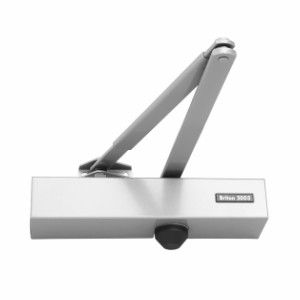
You can consider the type of building you are managing or responsible for and select an appropriate fire door closer accordingly.
- High traffic buildings - Healthcare and education are examples of buildings where public safety and security is important, as many people are coming and going all the time. You need to prioritise accessibility and control, so that doors close at an appropriate speed.
- Door size – What size and type of doors does your building have? You need to choose door closers with a big enough power rating so that they are physically capable of closing and controlling the action of your doors.
- Security – Latching is essential where security is a priority. This is ensuring that a door properly latches and therefore doesn’t drift open. A latch is also sometimes used to engage a security lock. Some door closers allow you to control the latching speed, ie. the final few degrees of the closing arc so that the closing pressure is sufficient to engage the latch, but not so much that the door slams and bounces out without engaging the latch.
- Aesthetics – Surface-mounted door closers, such as an overhead door closer, are very popular for commercial buildings, but are very visible. In some commercial settings, such as hospitality, high-end retail, salons and some contemporary office spaces, aesthetics are important, so a concealed door closer, such as one that is fitted into the floor or the door itself, may be preferred. These do have more installation complexity, however.
So the first and most important consideration when choosing the right fire door closer for your building, is that the door closer is compliant with fire regulations. After that you need to find a door closer that has the power rating appropriate for your building, can prioritise what you need it to do in terms of safety and security, and also has the aesthetic qualities which suit the interior design of the building. Check out our range at MB Direct and choose the right fire door closer for you.